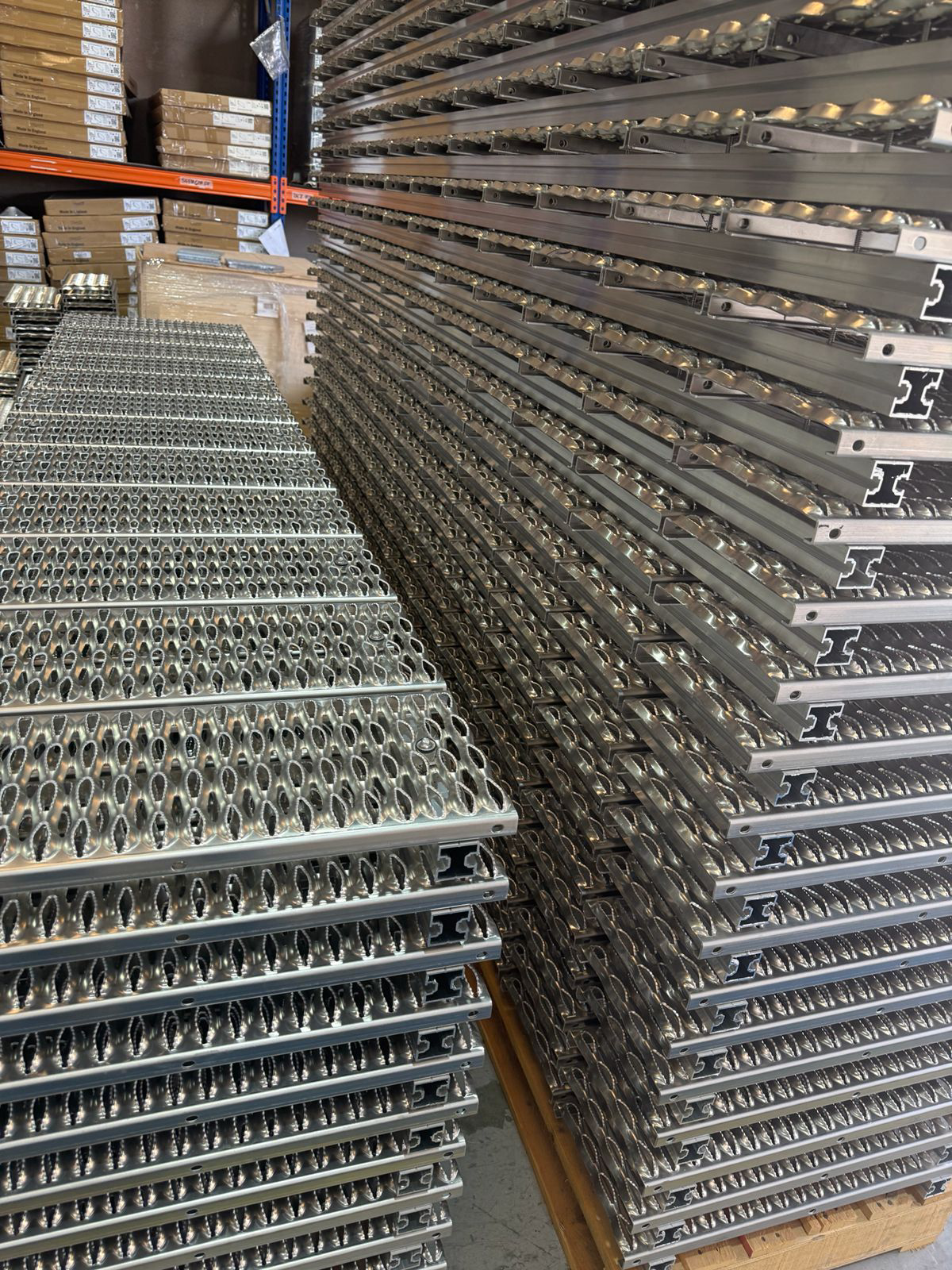
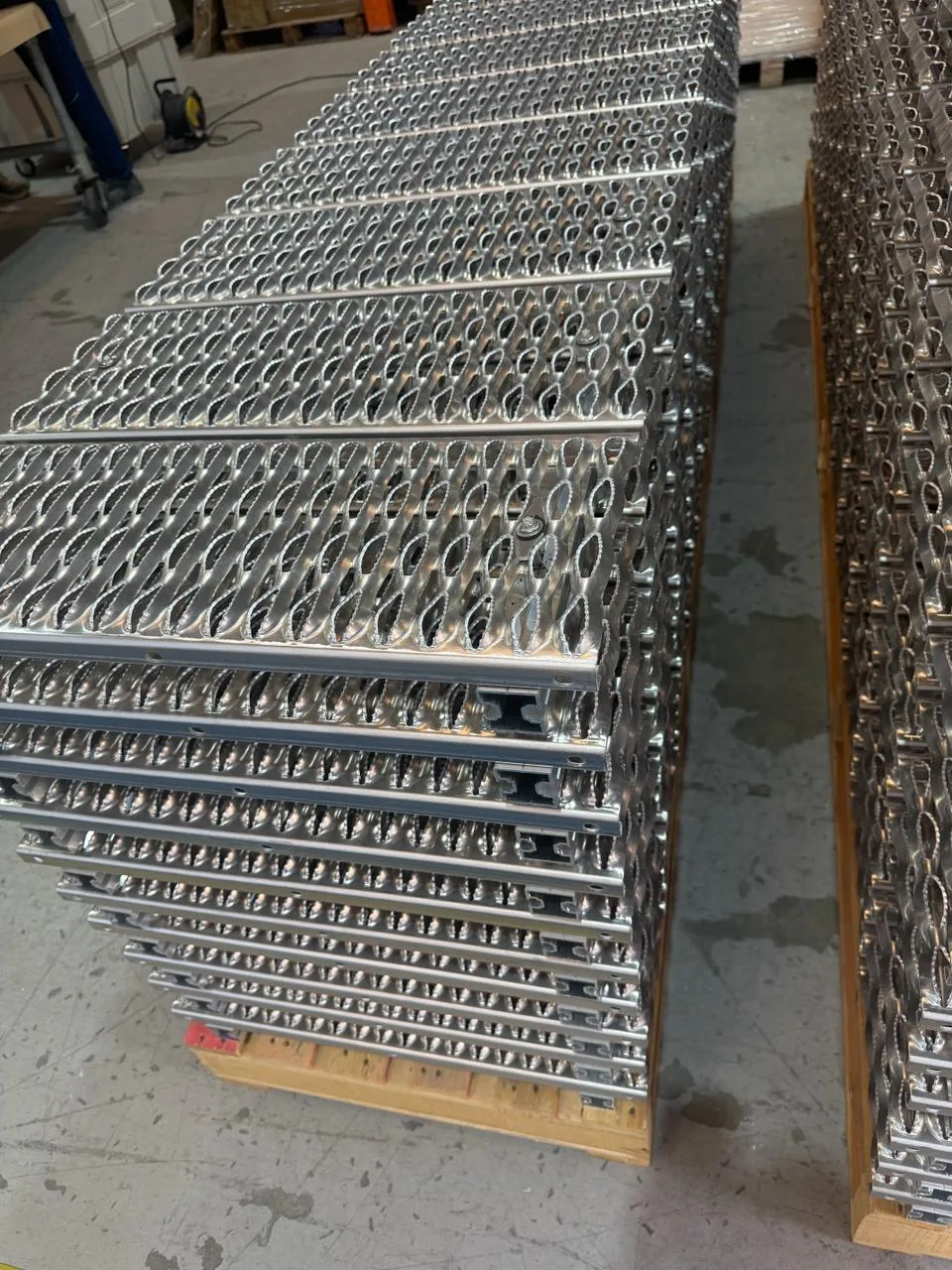
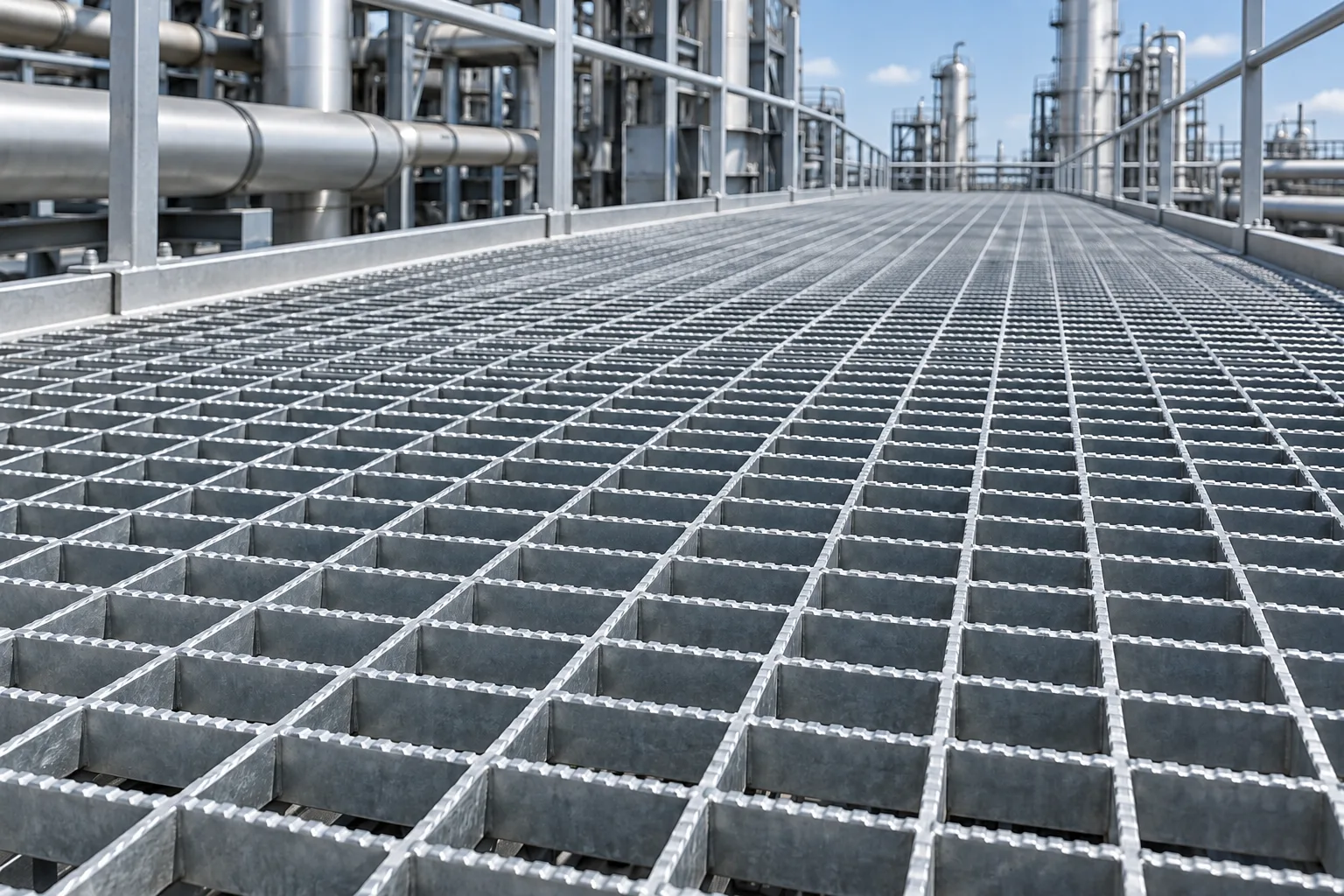
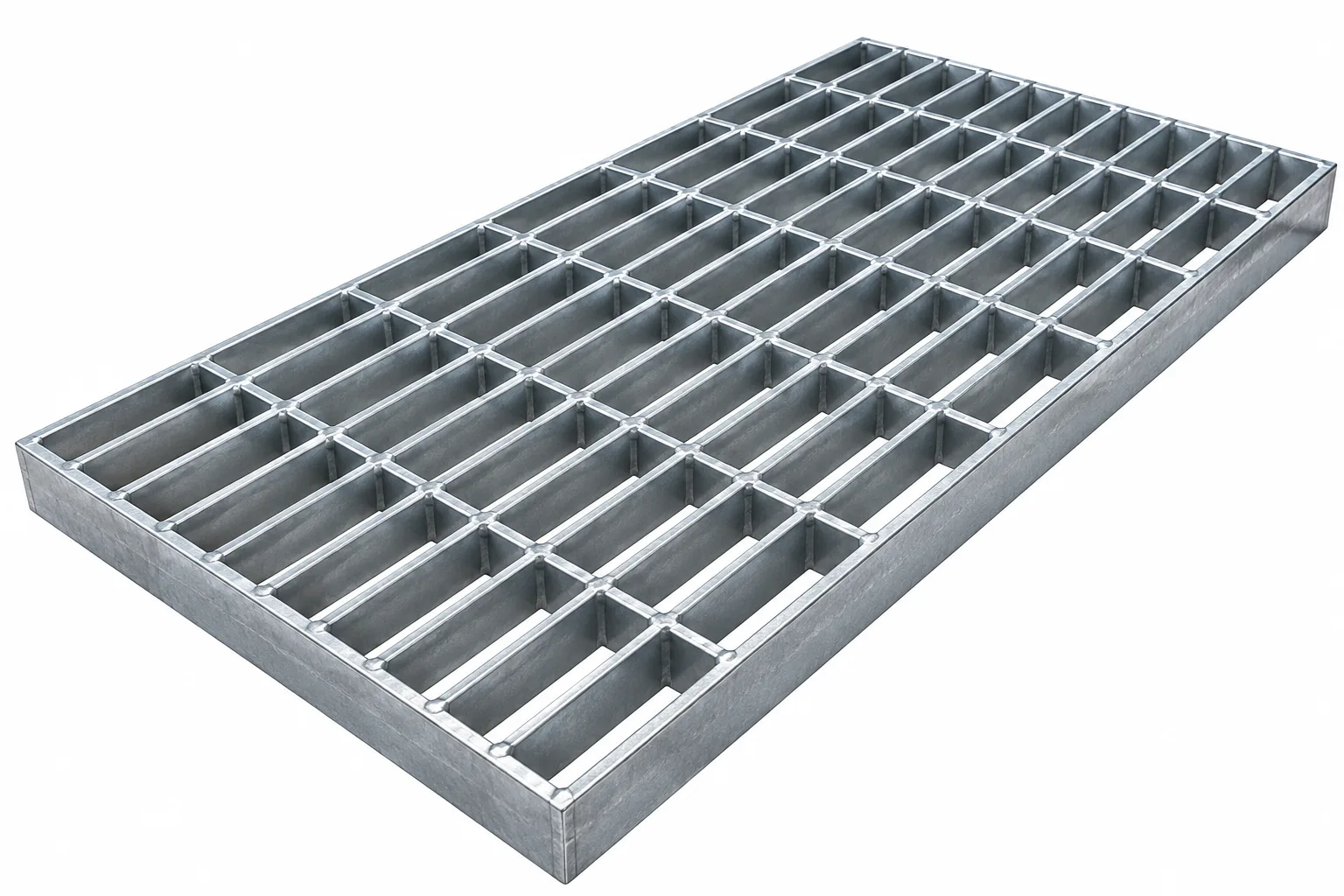
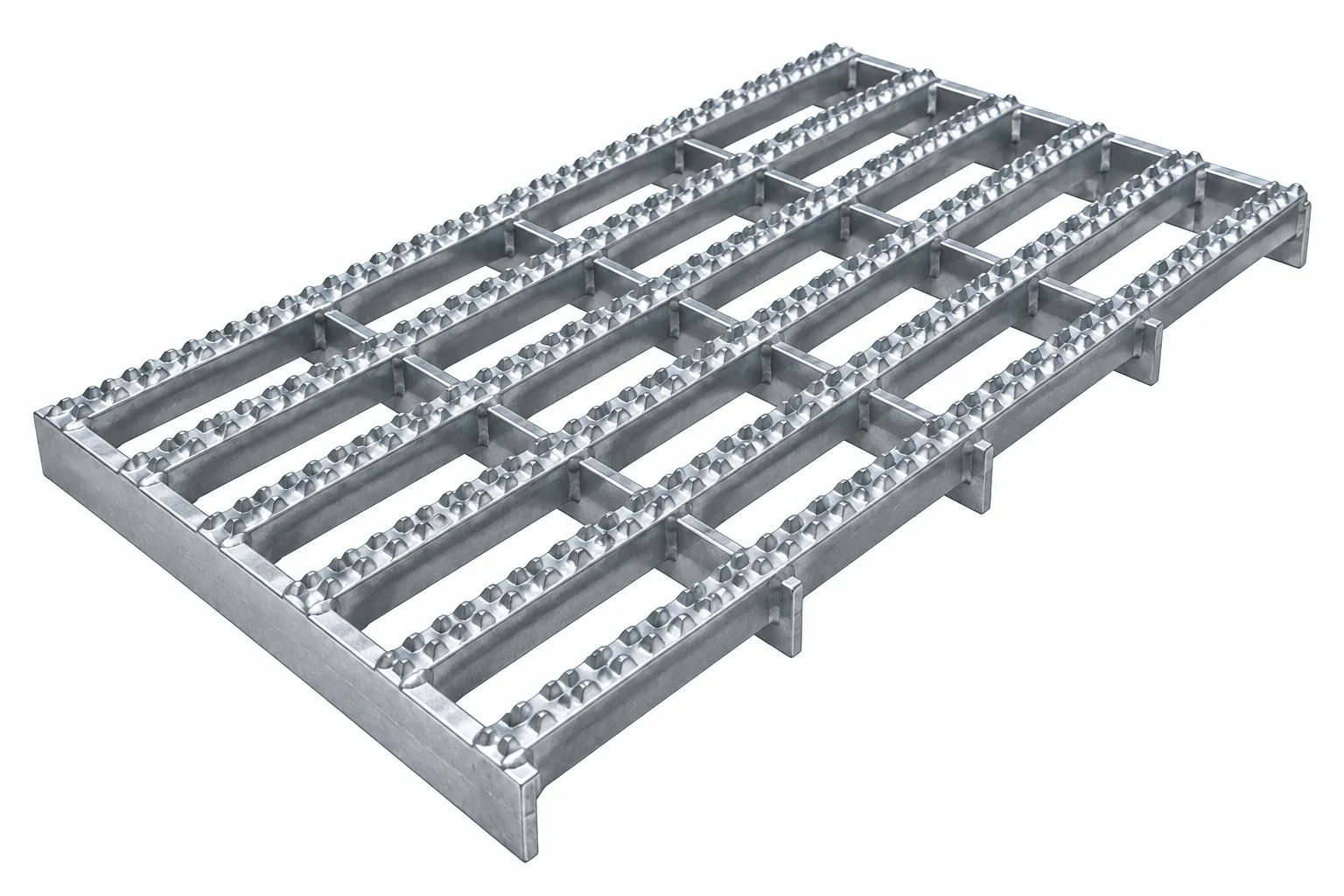
Bar grating is a factory built, open pattern flooring and decking product, made by joining a row of load carrying bearing bars to cross bars running perpendicular to them. AMMS Global manufactures and exports welded steel bar grating, press lock grating, stainless steel bar grating and aluminum bar grating, built to NAAMM MBG 531, ASTM, EN and IS 4759 standards, and we supply industrial flooring, walkways, platforms, stair treads and drainage covers to clients across India, the Middle East, Africa, Europe and Southeast Asia. Each panel is engineered to take heavy industrial loading while still letting air, light and liquid move through freely underfoot.
What Is Bar Grating?
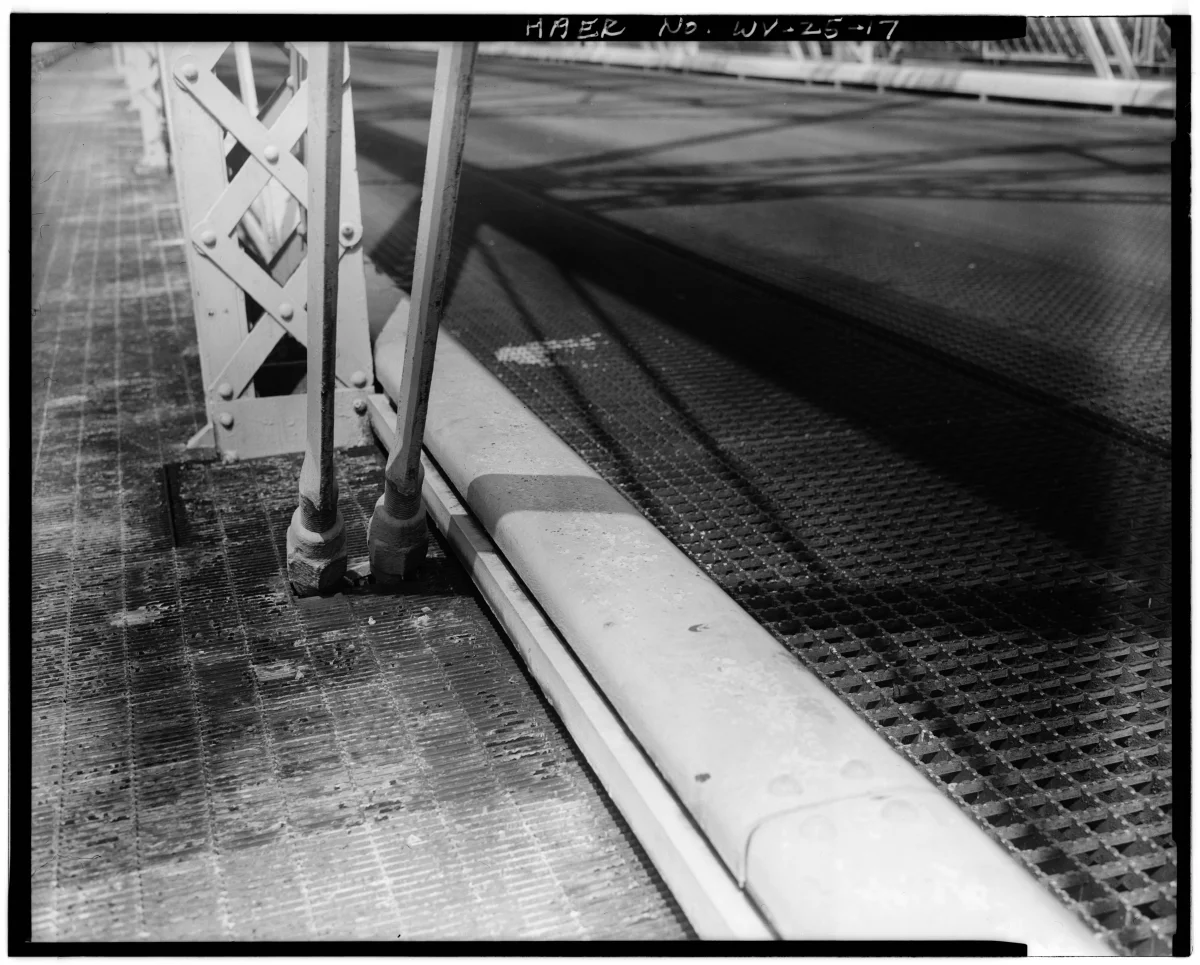
Bar grating, or metal bar grating if you want the full term, is an open pattern flooring system made by taking a set of straight bearing bars and fixing cross bars across them at regular gaps, using welding, press locking or swage locking as the joining method. The result is a rigid panel that stays roughly 60 to 75 percent open. That gap isn't incidental, it's the whole reason the product works, since it lets air, light, heat, sound and liquid drain straight through instead of pooling on top like a solid surface would. That's why steel bar grating shows up constantly on industrial platforms, walkways, mezzanine decks and trench covers, basically anywhere a closed floor would trap heat, choke off drainage or let vapor collect into a fire or explosion hazard.
Types of Bar Grating We Manufacture
Welded Steel Bar Grating
This is the construction type most projects default to. Rectangular bearing bars get forge welded to twisted or straight cross bars at every crossing point, which produces a strong, rigid panel at the lowest cost per square foot of anything in the range. It's the standard pick for general industrial flooring, platforms and walkways where cost and strength matter more than surface finish.
Press Lock Grating
Here the cross bars are pressed and mechanically locked into notched bearing bars instead of welded, which leaves a flush, smooth top with no visible weld marks. Press lock grating tends to get specified for architectural work, retail flooring and any application where the finished look matters as much as the structural strength.
Aluminum Bar Grating
Light, naturally resistant to corrosion, and non sparking, aluminum bar grating is the go to option for marine decks, offshore platforms, coastal structures and food and beverage facilities, basically anywhere steel would either corrode over time or need constant repainting to survive.
Stainless Steel Bar Grating (304/316)
Reserved for hygiene sensitive or heavily corrosive settings, pharmaceutical plants, chemical processing lines, food production and marine or offshore installations, where the long term resistance to corrosion is worth paying more for upfront.
Understanding Bar Grating Spec Codes (e.g. 19/4 or 19-W-4)
Bar grating gets specified using a standard industry code, 19-W-4 being the classic example, sometimes shortened in conversation to "19/4" bar grating.
19 refers to the bearing bar spacing on center, roughly 19/16 inch, which comes out to about 1-3/16 inch
W refers to the construction type, W for welded, PLG for press lock, SL for swage locked
4 refers to the cross bar spacing on center in inches, 4 inch is standard duty, 2 inch is used where foot traffic is heavier or ADA compliance is required
For ADA compliant spacing, 11-W-4 and 7-W-4 are the common choices, both tightening the gap between bearing bars so wheels, canes and heels stay safe.
Materials and Finishes
Material | Best For | Typical Finish |
Carbon Steel | General industrial flooring, platforms, structural decking | Mill finish, painted, or hot dip galvanized |
Galvanized Steel | Outdoor structures, high moisture environments | Hot dip galvanized (ASTM A653) |
Stainless Steel Bar Grating (304/316) | Chemical, pharma, food grade, marine environments | Mill or polished finish |
Aluminum Bar Grating | Marine, offshore, coastal, weight sensitive structures | Mill finish, naturally corrosion resistant |
Specifications
Property | Standard Range |
Bearing bar spacing | 15/16 inch to 1-15/16 inch on center |
Cross bar spacing | 2 inch or 4 inch on center |
Bearing bar depth (thickness of grating) | 3/4 inch to 2-1/2 inch, depending on load requirement |
Surface options | Plain, serrated (slip resistant), Algrip |
Panel size | Standard panels up to approximately 3 ft x 20 ft, plus custom cut to size panels |
Open area | Approximately 60 to 75 percent |
Governing standards | NAAMM MBG 531, ASTM A1011 / A36 / A653 / A666, IS 4759, AS 1657 / AS 3679 |
Applications and Industries
Industrial platforms, catwalks and mezzanine flooring
Walkways, crossovers and stair treads
Trench, drain and pit covers
Safety barriers and fall protection flooring
Oil, gas and petrochemical facility decking
Power plants and water treatment facilities
Marine decks and offshore platforms (aluminum bar grating and stainless steel bar grating)
Warehousing, ports and material handling structures
Why Source Bar Grating from AMMS Global
Manufactured to NAAMM MBG 531, ASTM, EN and IS 4759 standards for global compliance
Welded steel bar grating, press lock grating, swage locked, aluminum bar grating and stainless steel bar grating, all under one roof
Custom fabrication available, cut outs, banding, toe plates and non standard panel sizes
Export ready packaging and documentation for international shipments
Quote turnaround within 24 hours
Frequently Asked Questions
1. What is a grating bar?
A grating bar, or bar grating, is an open grid flooring panel built from parallel load bearing bars connected to cross bars running perpendicular to them. Steel bar grating and aluminum bar grating are the two forms you'll see most often, used across industrial platforms, walkways and drainage covers wherever an open, load bearing surface is needed.
2. What are the two types of grating?
The two broad categories are bar grating, built from straight load bearing bars and cross bars in either welded or press lock construction, and plank type or expanded metal grating, formed from a solid or slotted sheet instead. Within bar grating specifically, the main construction methods are welded steel bar grating, press lock grating and swage locked grating.
3. What are the key differences between bar grating and safety grating?
Bar grating is the general term for the open grid product used in structural flooring and platforms. Safety grating typically means bar grating finished with a serrated or slip resistant surface, or built to a tighter ADA compliant spacing, aimed specifically at cutting slip risk and meeting accessibility rules in busy pedestrian areas.
4. How is bar grating measured?
Bar grating is measured and specified through three figures, bearing bar spacing center to center, bearing bar depth and thickness, and cross bar spacing, all rolled into a code such as 19-W-4. The 19 gives the bearing bar spacing, W tells you the construction type (welded in this case), and 4 gives the cross bar spacing in inches. Panel length and width get measured separately for cutting and installation.
5. What is the difference between press lock grating and welded grating?
Welded steel bar grating is forge welded at every crossing point, which gives it the highest strength for the lowest cost. Press lock grating is mechanically pressed into a flush, weld free surface instead, giving a cleaner, more architectural finish. Both hold up fine under industrial use, so the decision usually comes down to budget, load requirements and how much the surface finish matters.
6. What is the standard size of bar grating?
Standard bar grating panels are generally manufactured up to around 3 feet by 20 feet, with bearing bar spacing running from 15/16 inch to 1-15/16 inch on center and cross bar spacing set at either 2 inch or 4 inch. AMMS Global also fabricates custom cut to size panels against project drawings for both steel bar grating and aluminum bar grating.