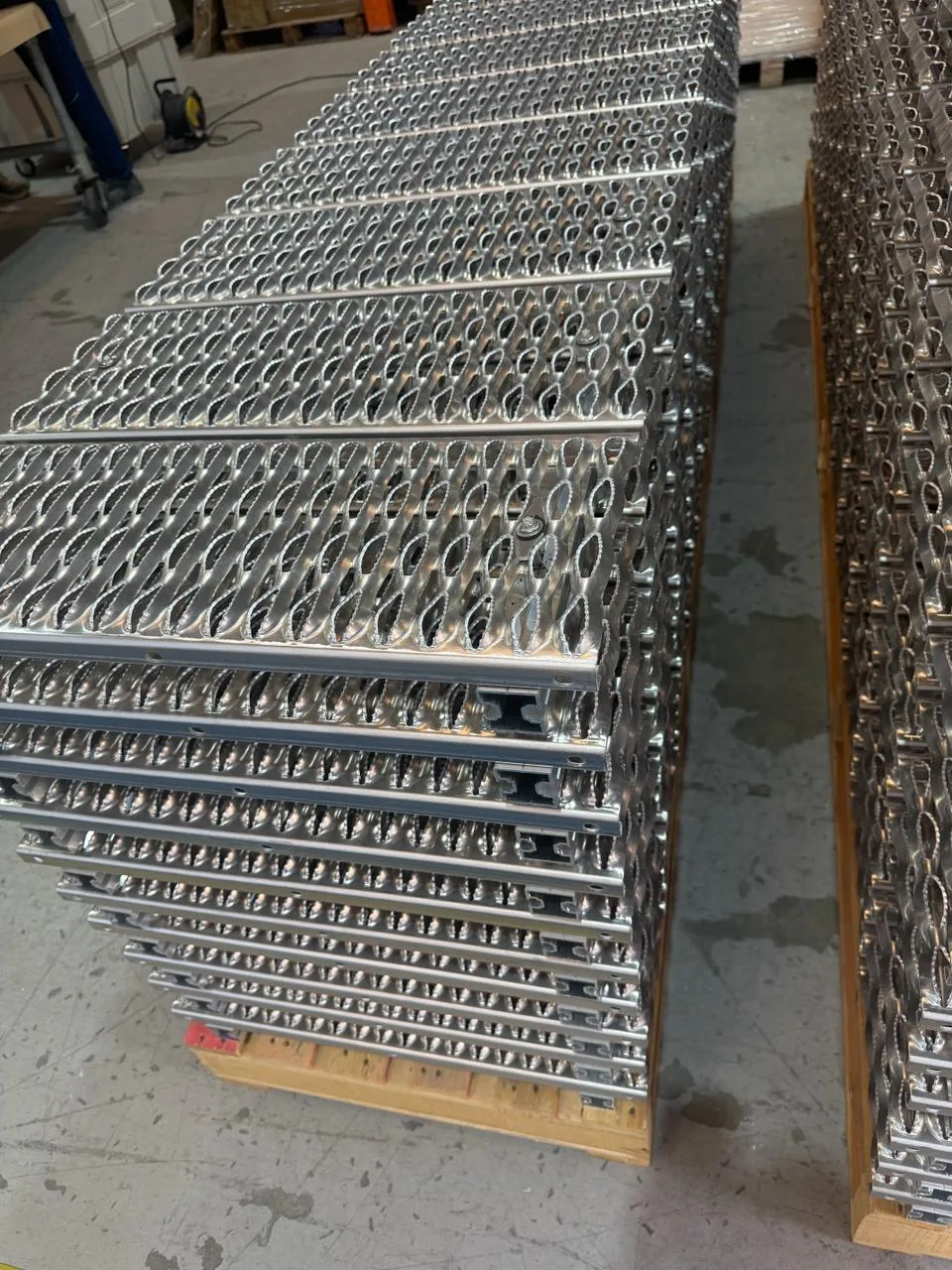
Need perforated metal sheet punched to an exact hole size and pattern? AMMS Global builds perforated metal in steel, aluminum, and stainless, with round, square, and slotted holes. We're not just reselling stock catalog sheets, we punch to your drawing and ship it out globally, one panel or a full production run.
Got a spec already? Send it over and we'll turn around a quote fast.
What Perforated Metal Actually Is
Take a solid sheet, punch a repeating pattern of holes through it, and you've got perforated metal. Round holes, square holes, slots, whatever the job calls for. The metal that gets punched out is gone for good, which is a big part of why perforated sheet costs more per square foot than expanded metal at the same gauge. Expanded metal, if you're not familiar, is a different process entirely, it's slit and stretched rather than punched, and nothing gets removed.
What you're paying for with perforated is consistency. Every hole lands in the same spot at the same size across the whole sheet. That kind of precision matters when a panel's job is filtering something, and a hole that's slightly off can throw the whole result out.
Material: Steel, Aluminum, or Stainless
Pick based on where the panel's going, not just what's cheapest up front.
Steel perforated sheet metal handles most structural and industrial jobs, and it's usually the budget-friendly default
Aluminum perforated metal weighs less and won't corrode, so it shows up a lot on facades, sunshades, and outdoor architectural pieces
Stainless steel is the pick for anything wet, food-grade, or chemically nasty
Galvanized steel splits the difference, cheaper than stainless but with some real corrosion resistance built in
Round, Square, or Slotted Holes
This is where cost and function start pulling in different directions.
Round hole perforated metal is the default for a reason. It's the cheapest to punch since the tooling doesn't take as much abuse, and it works fine for most filtration and screening jobs. If you don't have a strong reason to go with something else, round is usually the safe call.
Square hole perforated sheet metal costs a bit more to produce because the corners stress the punch tooling harder. In return you get more open area per hole, so airflow and visibility both improve. A lot of customers pick square purely because it looks sharper, not because they need the extra airflow.
Slotted perforated sheet metal uses long, narrow openings instead of round or square punches. It's built for sorting and sieving work, where material needs to move through in a particular direction rather than just falling through randomly spaced holes.
Round | Square | Slotted | |
Production cost | Lowest | Moderate | Moderate |
Open area | Standard | Higher | Highest |
Typical use | Filtration, screening | Airflow, visibility, looks | Sorting, sieving, drainage |
Appearance | Industrial | Cleaner, modern | Directional |
What People Actually Use It For
Filtering liquids, air, and particulates
Ventilation louvers, grilles, sunshades
Sound-dampening acoustic panels
Building facades and decorative cladding
Machine guards and safety enclosures
Sign panels, retail fixtures, furniture
Why Order From Us
Buying off a fixed catalog only works if your project happens to match what's already in stock. We build to your drawing instead:
Custom hole size, spacing, pattern, round, square, or slotted
Steel, aluminum, stainless, or galvanized
Cut-to-size sheets or bulk production runs
Quote back to you within 24 hours
We ship it wherever you're building
Four Numbers That Decide the Spec
Hole diameter or size
Center spacing, staggered or straight
Open area percentage, holes versus solid metal
Gauge, the thickness before punching
Not sure what fits your project? Tell us what the panel needs to do and we'll suggest the pattern and open area.