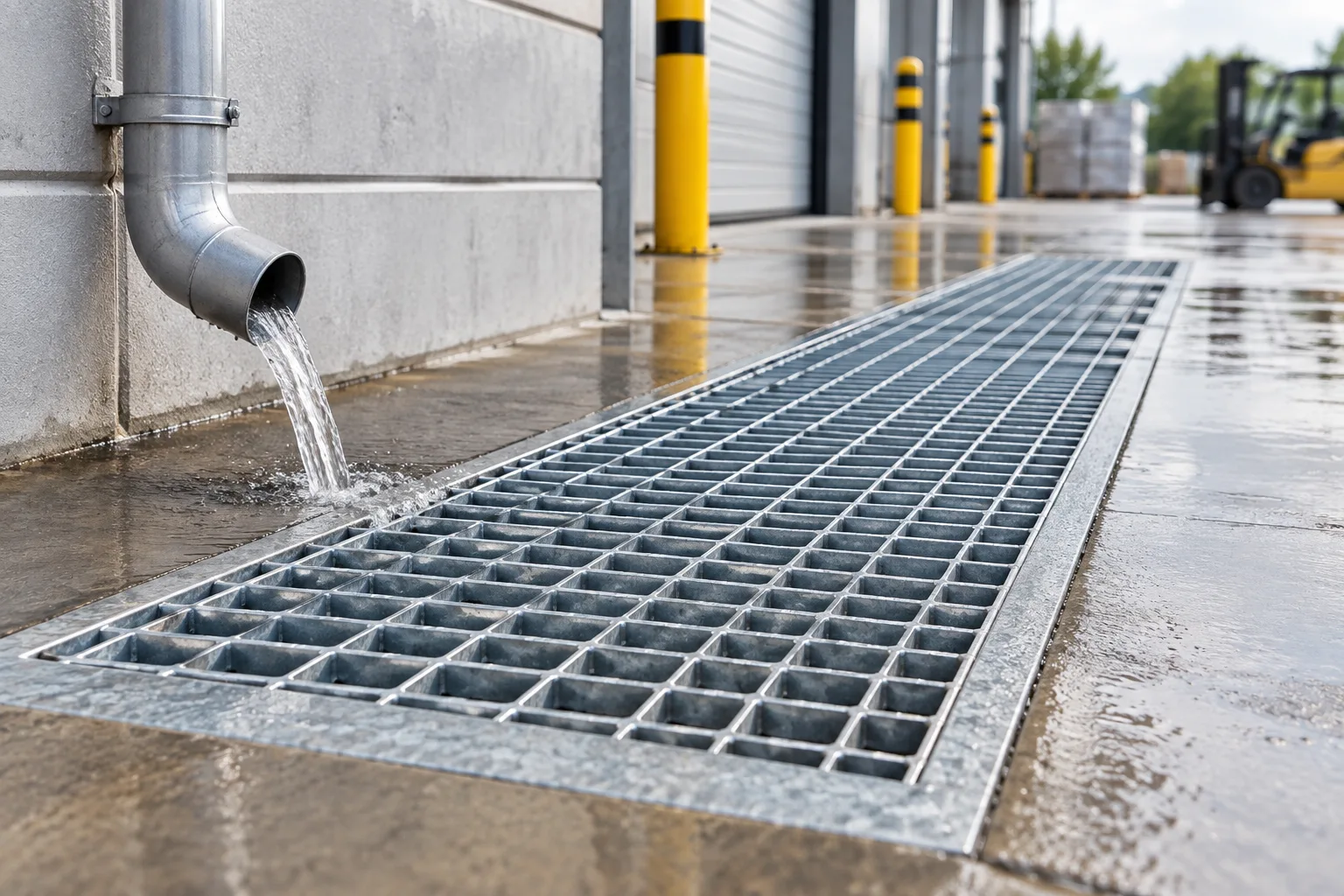
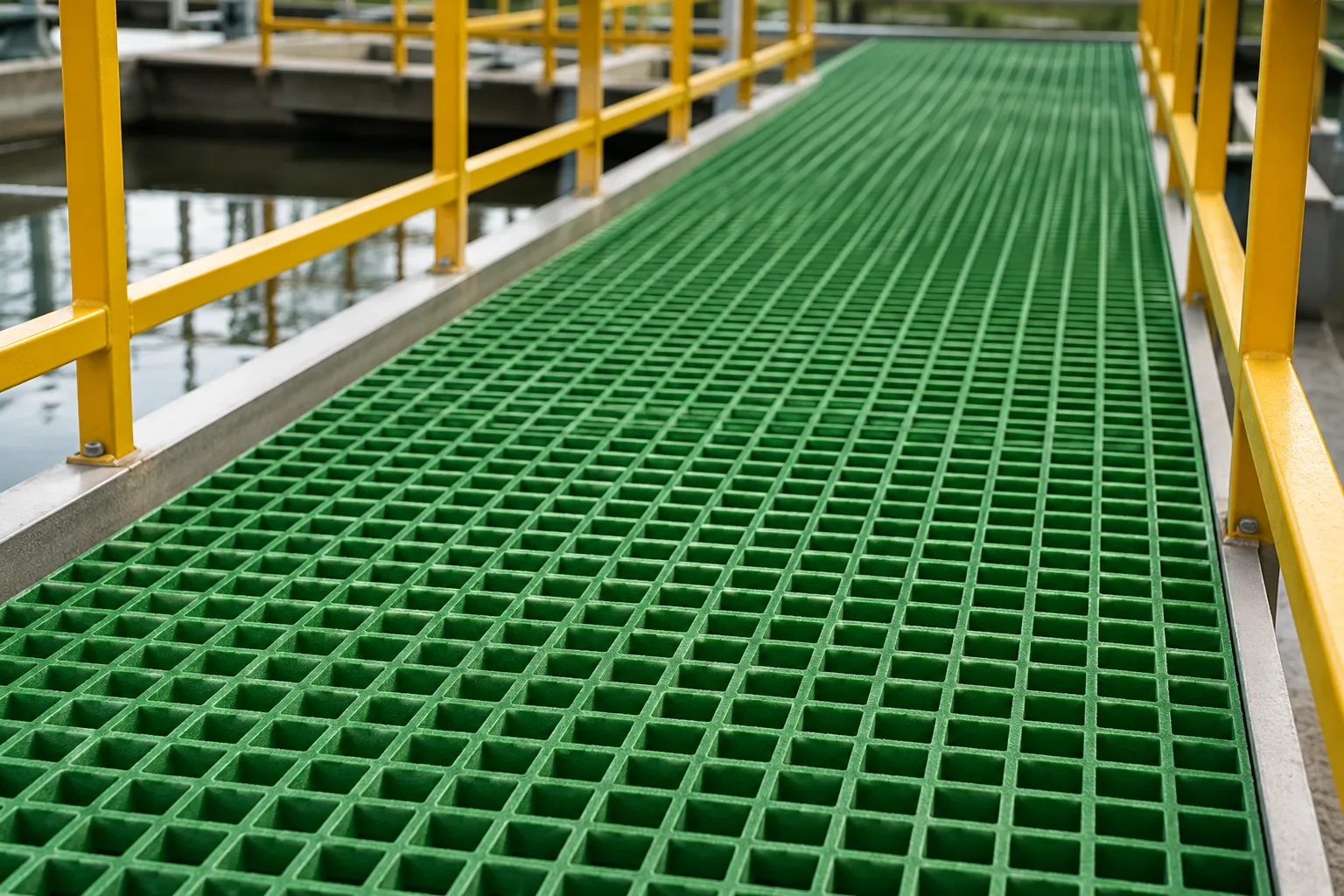
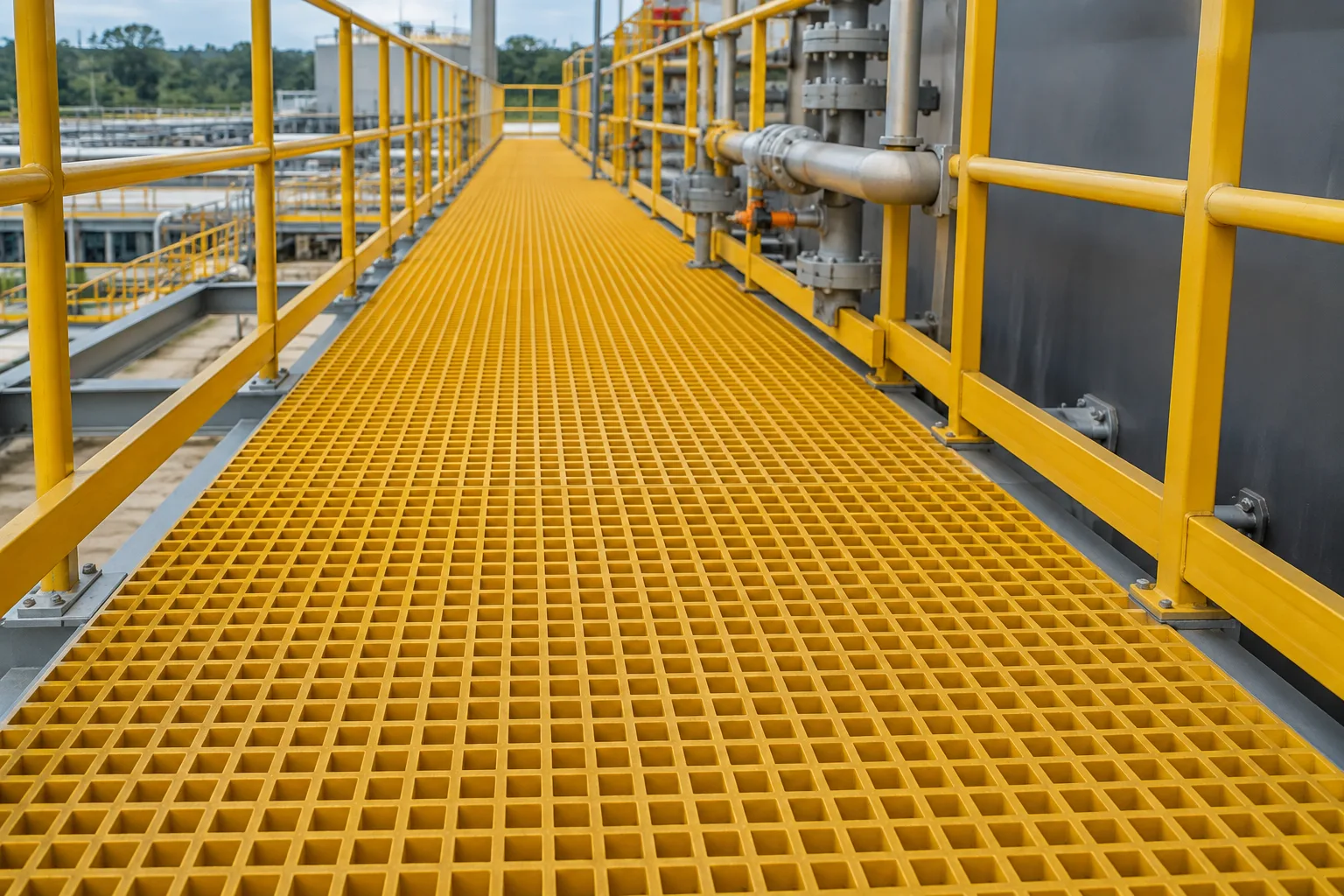
What Are Corrosion Resistant Gratings and Where Are They Used?
Corrosion resistant gratings, made from FRP or stainless steel, protect walkways and platforms from moisture, chemicals, and saltwater in demanding industrial environments.
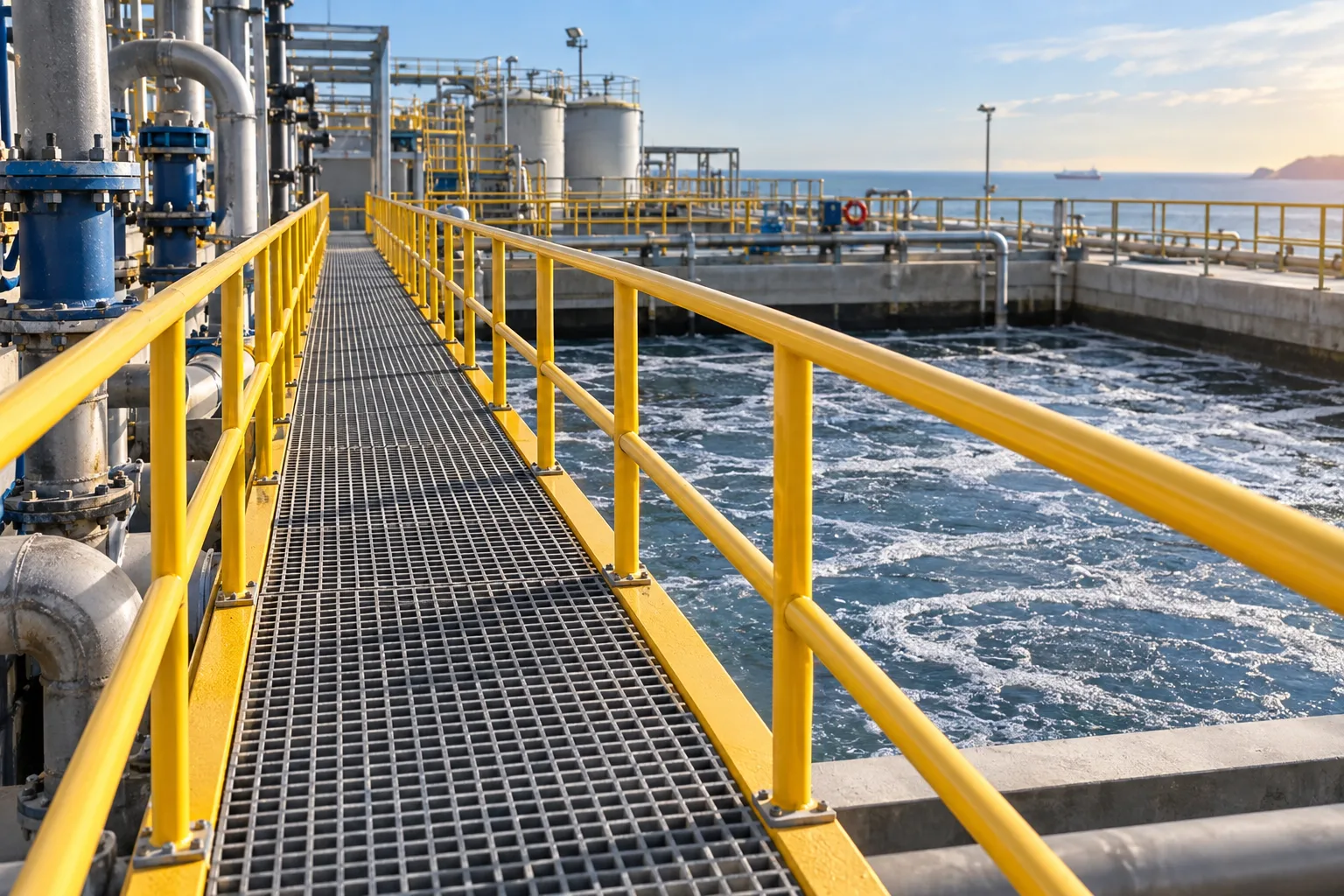
Corrosion resistant gratings are load-bearing open-grid flooring panels engineered to withstand moisture, chemicals, saltwater, and industrial atmospheres without rusting or degrading. They are built primarily from fiberglass reinforced polymer (FRP/GRP) or stainless steel, and they serve as walkways, platforms, stair treads, trench covers, and drainage grates in environments where standard carbon steel would fail prematurely.
For facilities managers and engineers, the choice usually comes down to two material families: FRP composites and stainless steel alloys. AMM Solutions supplies both categories, and the right selection hinges on chemical exposure, load requirements, electrical safety, and maintenance expectations.
Material Options Compared
The table below summarizes the practical differences between the main corrosion resistant grating types.
Material | Best For | Key Strengths | Limitations |
FRP Molded Grating | Chemical plants, wastewater, marine docks | Bi-directional strength, non-conductive, resists over 200 chemicals | Lower stiffness than steel, needs support at shorter spans |
FRP Pultruded Grating | Long-span walkways, heavy industrial platforms | High unidirectional strength, higher glass-to-resin ratio | Primarily strong in one direction, higher cost than molded |
Stainless Steel Grating | Food processing, architectural, hygienic areas | High strength, fire resistance, clean appearance | Conducts electricity, heavier than FRP |
Aluminium Grating | Light-duty marine, architectural | Lightweight, naturally corrosion resistant | Softer, lower load capacity, can corrode in strong alkalis |
FRP Grating: Molded vs Pultruded
Fiberglass Grating is the broad term covering both molded and pultruded FRP panels. The distinction matters more than many buyers realize.
FRP Molded Grating is formed in open molds with continuous fiberglass rovings saturated in resin, creating a one-piece panel with strength in both directions. This makes it forgiving when loads hit from multiple angles and when panels are cut for odd shapes around pipes or equipment. It is available in square grid patterns (from 3/4 inch up to 2 inch grid height) and rectangular grid configurations. Common resin systems include polyester, vinyl ester, and phenolic, each suited to different chemical exposures. Phenolic grades, for example, are specified where low smoke and low toxicity matter in enclosed spaces or tunnels.
FRP Pultruded Grating uses a continuous pulling process that aligns fiberglass strands in one direction, producing I-bar or T-bar bearing bars with high stiffness over longer spans. Pultruded panels typically span further than molded panels of the same depth, which reduces the number of support beams needed. The trade-off is that pultruded grating is strongest along the bearing bar direction and must be oriented correctly during installation.
Both FRP types offer electrical non-conductivity, which is a decisive factor in substations, battery rooms, and anywhere stray current or arc flash is a concern. They also provide natural slip resistance when specified with a grit top surface, and they never need painting or galvanizing.
Stainless Steel and Other Metal Options
Stainless Steel Grating is the default choice where hygiene, fire resistance, or high point loads govern. Type 304 handles most atmospheric and washdown exposure, while Type 316 adds molybdenum for better resistance to chlorides, making it the common specification for coastal and marine environments. Fabrication methods include welded, dovetail pressure-locked, swaged, and riveted constructions, each with different load and span characteristics.
Welded Bar Grating offers the highest rigidity and is often used for heavy-duty industrial platforms and trench covers. It can be fabricated in stainless steel, aluminum, or galvanized steel depending on the environment.
Galvanised steel grating is a cost-effective middle ground. The zinc coating protects the underlying carbon steel, but the protection is sacrificial and finite. Once the galvanizing is scratched, cut, or worn through, corrosion begins. This makes it suitable for mildly corrosive outdoor exposure but a poor choice for continuous chemical contact or saltwater immersion.
Aluminium Grating is lightweight and naturally corrosion resistant in atmospheric and marine exposure, but it reacts aggressively with strong alkalis and can suffer galvanic corrosion when in contact with dissimilar metals without isolation.
Where These Gratings Actually Get Used
The application range is broad. Wastewater treatment plants use FRP molded grating extensively for walkways over clarifiers and chemical dosing areas, where hydrogen sulfide and chlorine attack steel quickly. Chemical processing facilities specify vinyl ester FRP for acid and caustic environments. Offshore platforms and docks use both FRP and 316 stainless depending on load and fire requirements.
Food and beverage plants lean toward stainless steel for its cleanability and resistance to frequent hot water washdowns. Architectural projects increasingly use stainless steel grating for entranceways, tree grates, and decorative screening where appearance and longevity both matter.
Practical Selection Factors
Beyond material, several details determine whether a grating performs as expected. Panel size and support spacing must align with the grating’s load rating. FRP panels are commonly supplied in 36 by 120 inch or 36 by 144 inch sheets, but cutting to fit around penetrations reduces strength if not planned properly.
Surface finish matters for safety. Grit-top FRP panels provide traction in wet or oily conditions, while smooth stainless steel can become slippery without a secondary treatment. Open area percentage affects both drainage and debris passage, with typical FRP panels ranging from roughly 40 to 70 percent open area depending on grid spacing.
One common mistake is specifying resin type without confirming the actual chemical concentration and temperature. A polyester resin may handle a chemical at room temperature but soften at elevated temperatures, where vinyl ester or phenolic would be required. Another mistake is mixing metal types in an assembly, such as using aluminum fasteners with stainless grating in a marine environment, which accelerates galvanic corrosion.
For projects where standard panels do not fit, options like Expanded Metal and Perforated Metal can be integrated into custom walkway or screening designs, often combined with structural supports to create a complete corrosion resistant system.
Getting the Right Specification
Start by defining the worst-case chemical exposure, the maximum span, the required open area, and whether electrical conductivity is acceptable. Then match the material and fabrication method to those conditions rather than defaulting to the cheapest available panel. AMMS Global provides material selection guidance and fabrication support for FRP, stainless, aluminum, and galvanized grating systems.
For a project-specific recommendation and pricing, get a quote with your span, loading, and exposure details ready.