What Is the Best Fiberglass Molded Grating for Chemical Plants?
The best fiberglass molded grating for chemical plants uses vinyl ester resin and a gritted surface, matched to the chemicals, temperature and fire rating needed.

The best fiberglass molded grating for chemical plants is vinyl ester resin grating with a gritted surface and a high resin-to-glass ratio, typically around 65% resin to 35% glass. This provides strong resistance to aggressive acids, alkalis, and solvents while maintaining bidirectional strength for complex floor layouts. For less severe exposure, isophthalic polyester offers a lower-cost alternative that handles moderate chemical contact. AMM Solutions supplies both options for chemical processing environments.
Resin Choice Determines Chemical Performance
The resin system, not the fiberglass, determines how well molded grating holds up in a chemical plant. Three resin types dominate industrial applications.
Vinyl ester resin is the workhorse for severe chemical environments. It withstands continuous splash and spill zones involving heavy acids and alkalis, with a maximum service temperature around 185°F (85°C). For sulfuric acid, caustic solutions, or chlorinated solvents, vinyl ester is the default specification.
Isophthalic polyester resin suits moderate exposure. Wastewater treatment areas, general operating platforms, and secondary containment zones often use this resin. Its temperature ceiling is near 160°F (71°C), and it costs less than vinyl ester while outperforming standard polyester in corrosive conditions.
Phenolic resin prioritizes fire performance over chemical resistance, delivering low smoke toxicity and excellent flame-spread ratings. Plants with strict fire codes or enclosed processing areas often specify phenolic grating despite its higher price and more limited chemical compatibility.
Why Molded Beats Pultruded in Chemical Plants
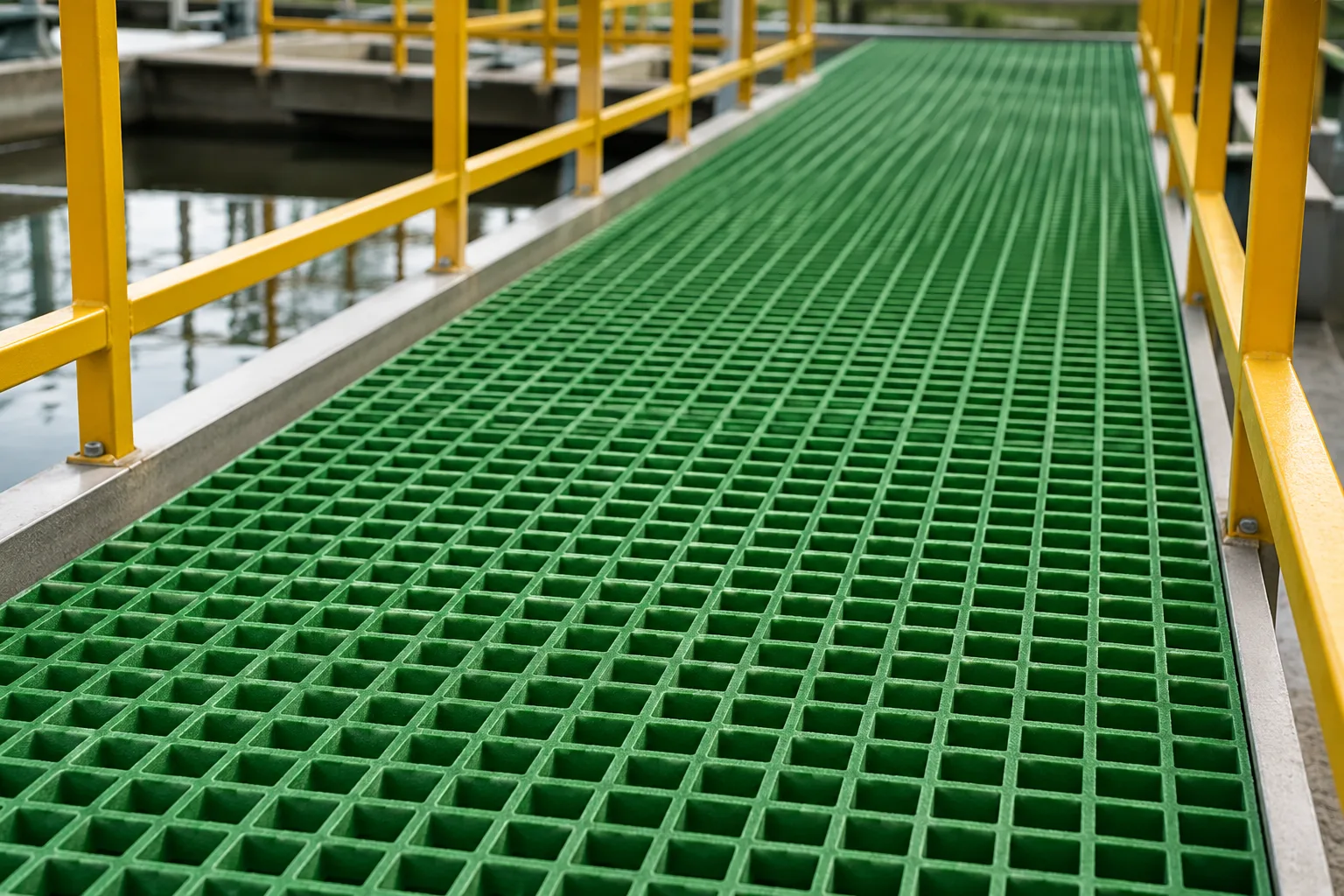
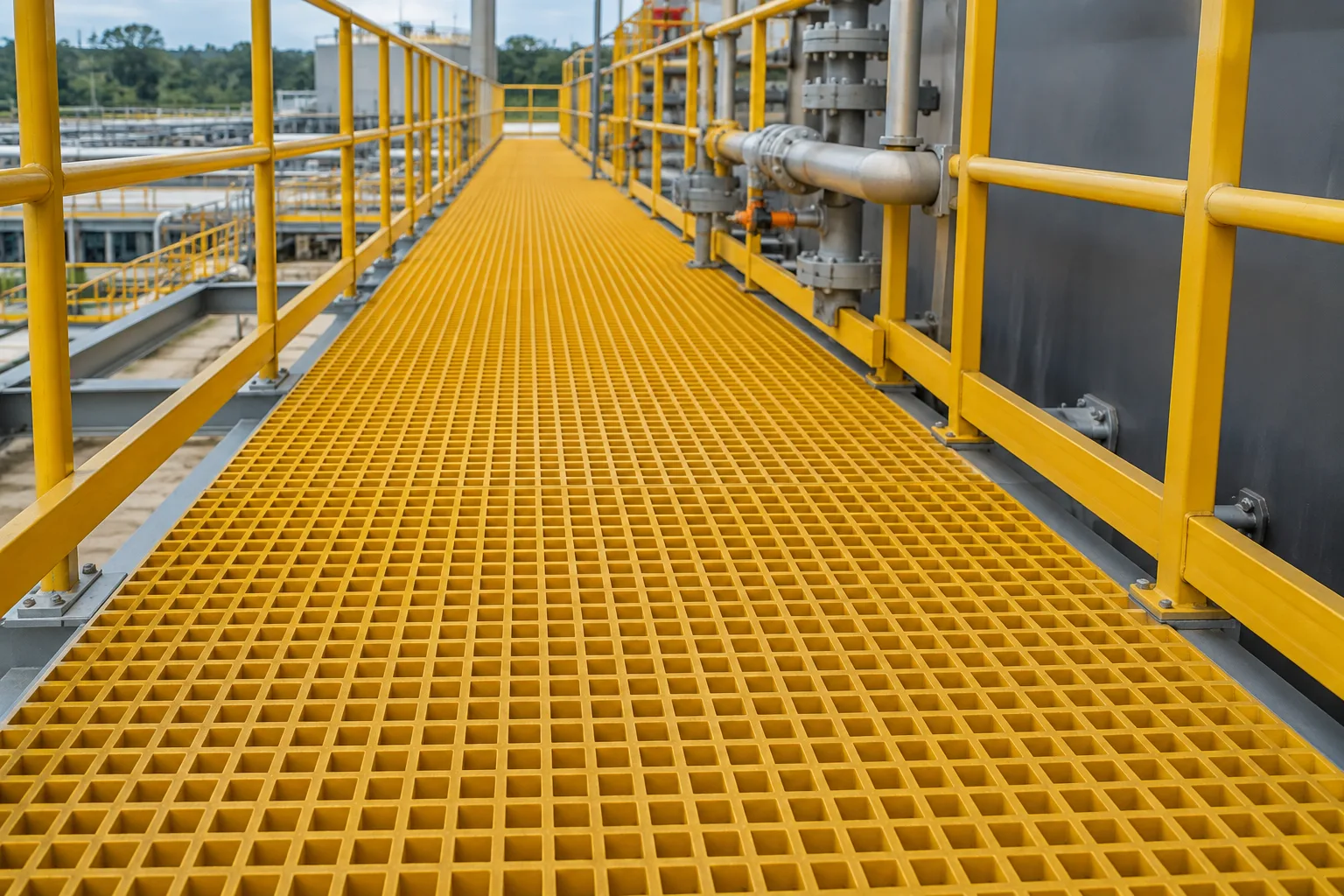
Molded FRP grating uses interwoven continuous glass strands formed in a mold, creating equal strength in both directions. This bidirectional strength matters because piping, valves, and structural penetrations force frequent cutouts. Molded grating holds its load rating even when field-cut around obstructions.
FRP Pultruded Grating uses parallel glass rovings that deliver high strength in one direction only. It works for long-span walkways and straight runs, but field modifications compromise its structural integrity more readily. For chemical plant flooring with irregular layouts, molded grating is safer.
The higher resin content in molded grating also improves corrosion resistance. More resin means more chemical barrier between glass fibers and the environment. Pultruded products typically carry less resin relative to glass, favoring mechanical strength but reducing chemical protection.
Surface Configuration and Slip Resistance
Chemical plants are wet, oily, and often hazardous underfoot. Gritted surfaces, using quartz or epoxy grit embedded in the top layer, provide traction on walkways, platforms, and stair treads. This surface is recommended for any area where chemical spills or condensation are possible.
Meniscus, or concave, surfaces offer a smoother finish that cleans more easily. These suit dry areas, food-adjacent processing zones, or locations where debris accumulation is a concern. The trade-off is reduced slip resistance when wet.
Fire Ratings and Building Codes
Chemical plants frequently require grating meeting ASTM E-84 Class 1 flame spread ratings, meaning a score of 25 or less. Vinyl ester and isophthalic polyester grating can achieve this rating with fire-retardant additives. Phenolic resin naturally performs better in fire conditions, making it preferred where smoke toxicity and flame spread are critical.
Specifying a Class 1 rating is not optional in most chemical facilities. Insurance requirements and local fire codes often mandate it, and the rating should be confirmed in writing from the manufacturer rather than assumed.
Common Specification Mistakes
Several errors recur in chemical plant grating specifications. The first is choosing resin based on price alone. A general-purpose polyester grating installed in an acid handling area may fail within months, while a vinyl ester product would last for years.
Another mistake is overlooking the resin-to-glass ratio. Some manufacturers reduce resin content to cut costs, lowering chemical resistance and shortening service life. Request documentation confirming the 65/35 ratio for corrosion-critical applications.
A third error is ignoring the bidirectional strength advantage of molded grating. Specifying pultruded grating for a floor with multiple pipe penetrations often leads to cracking around cutouts and eventual replacement.
Comparing Resin Options for Chemical Plants
Resin Type | Best For | Max Temp | Fire Performance | Relative Cost |
Vinyl Ester | Severe acids, alkalis, solvents | ~185°F (85°C) | Class 1 available | Higher |
Isophthalic Polyester | Moderate chemical exposure, wastewater | ~160°F (71°C) | Class 1 available | Moderate |
Phenolic | Fire-critical areas, enclosed spaces | Varies by product | Superior, low smoke | Highest |
Installation and Long-Term Performance
Field fabrication is straightforward with molded grating. Standard carbide or diamond tools cut panels cleanly, and the open-mesh design allows liquids to drain through rather than pool, reducing corrosion underfoot and improving safety in spill-prone areas.
Panel sizes vary by manufacturer, but common dimensions include 4 x 8 foot sheets in multiple thicknesses. Thicker panels, typically 1.5 to 2 inches, handle heavier loads and longer spans. For chemical plant platforms, 1.5-inch thickness is a frequent starting point, with 2-inch panels specified for high-traffic or equipment-load areas.
Support spacing matters as much as panel thickness. Molded grating deflects under load, and exceeding the manufacturer’s recommended span leads to a springy, unsafe walking surface. Chemical plants should verify span tables for the specific resin and panel configuration.
Making the Right Specification
Start by identifying the chemicals present, their concentrations, and whether exposure is continuous or incidental. This determines the resin. Next, assess the floor layout and cutout requirements. Complex layouts favor molded over pultruded. Then specify surface type based on slip risk, and confirm fire rating requirements with the facility’s safety team.
Request third-party test data for chemical resistance and fire performance. Reputable manufacturers provide this documentation without hesitation. AMMS Global can guide resin selection based on specific chemical exposure lists.
When comparing quotes, verify that resin type, resin-to-glass ratio, fire rating, and surface configuration are identical across vendors. A lower price often reflects a different resin or reduced resin content, not a better deal.