How to Choose the Right industrial Grating for Your Application
Steel, stainless, aluminium, or fiberglass? Here's how load, corrosion exposure, and safety code requirements decide which industrial grating actually fits your project.
The word grating pulls double duty: an adjective for a harsh, scraping sound, and a noun covering everything from a cheese shredder to an optical diffraction element. In construction and industrial engineering, though, it almost always means a structural grid of load-bearing bars used for flooring, drainage covers, and access platforms. Choosing the right version comes down to material, fabrication method, and the environment it will face. AMMS Global regularly helps engineers weigh those factors before a single panel is ordered, because a grating that fits a dry mezzanine can fail quickly over a chemical trench.
The Many Meanings, and Why Industrial Grating Dominates
As an adjective, grating describes a voice or noise that irritates the nerves, like metal scraping stone. In the kitchen, grating shreds carrots or cheese against a rough surface. In physics, a diffraction grating splits light into its spectrum using microscopic parallel lines. These all share the core idea of repeated, parallel elements, but the structural definition is the one specifiers encounter daily.
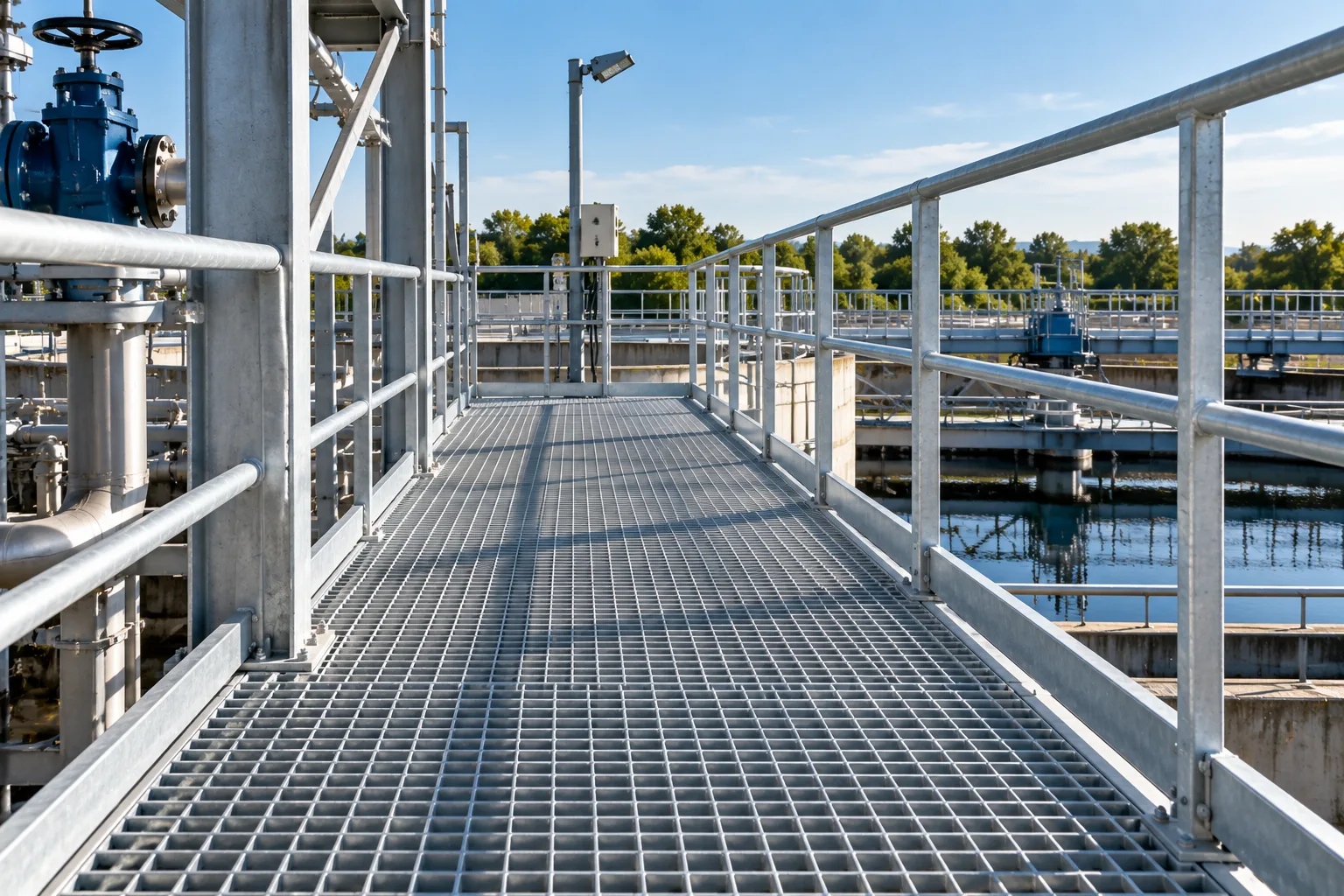
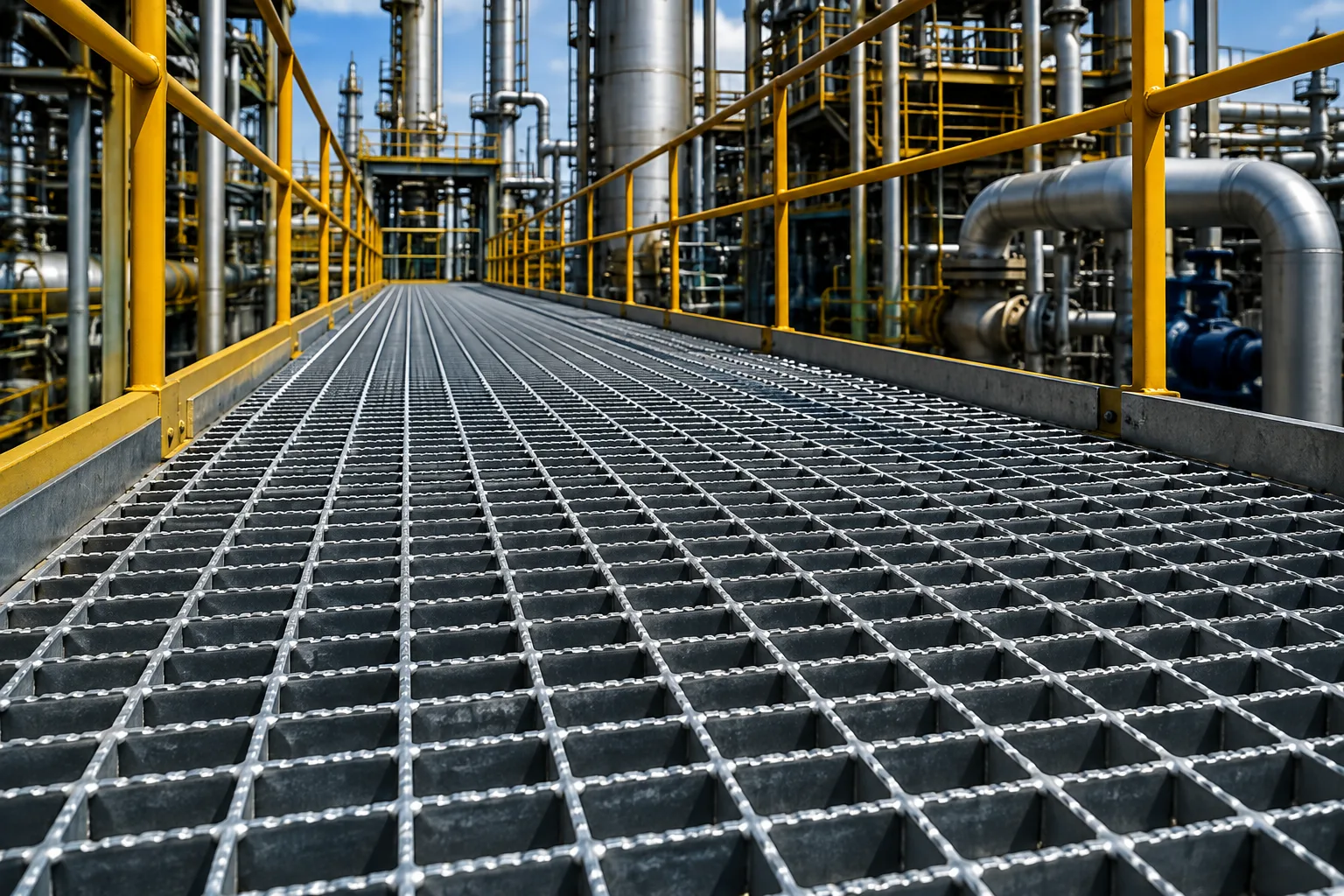
Industrial grating is a grid of bearing bars and cross rods, open enough to let light, air, and liquids pass, yet strong enough to support foot traffic, carts, or even heavy vehicles. You see it in trench drains, factory catwalks, offshore platforms, and architectural sunshades. Its history stretches from subterranean ventilation shafts to the welded steel mats that served as portable runways during World War II, often called magic carpets.
Four Grating Materials That Cover Most Specifications
The table below lines up the major options side by side, using the exact terms engineers and buyers search for.
FRP Molded Grating uses a mould that fuses resin and continuous glass strands into a one-piece panel with bi‑directional strength and a grit‑top surface for slip resistance. FRP Pultruded Grating pulls rovings through a resin bath and a heated die, creating high‑stiffness bars with a unidirectional grain, often preferred for long clear spans where deflection must stay low.
Bar Grating in steel or aluminium is typically defined by its bearing bar depth and spacing, which determine the span capability. A standard 25 mm × 3 mm twisted square cross‑rod at 100 mm centres is common, but customising the bar thickness and pitch changes the load rating dramatically. For dry, indoor environments, Welded Bar Grating offers the most economical combination of strength and open area.
The Three Questions That Drive a Decision
No single grating works everywhere. Experienced specifiers walk through these checks before finalising a drawing.
First, the load. Foot traffic demands less than a forklift. Bar grating with deeper bearing bars, around 40 mm or 50 mm, spans wider intervals without needing intermediate supports, while thinner panels may require additional framing. Fiberglass grating, despite its low weight, can handle the same uniform loads as steel when properly sized, but its flexural modulus is lower, so deflection often governs the design.
Second, corrosion and chemical exposure. Bare carbon steel will rust fast in humid or wash‑down areas unless hot‑dip galvanised. Stainless Steel Grating in 316 grade holds up against chlorides, making it the default for coastal and food‑sanitation environments. Where even stainless struggles, acid baths or strong oxidisers, FRP Molded Grating and FRP Pultruded Grating offer broad chemical resistance, though concentrated solvents can attack resin systems, so the resin type, polyester, vinyl ester, or phenolic, must match the chemical species present.
Third, safety and code compliance. Open area, typically 40 % to 80 %, ensures drainage and light transmission but also affects the risk of objects falling through. Slip resistance is critical; serrated steel bars or grit‑bonded FRP surfaces give workers traction on oily or wet platforms. International standards such as those from the ADA, OSHA, or the relevant local building code set minimum requirements for toe plates, handrail interfaces, and fire egress. Fiberglass Grating can carry a flame‑spread rating and self‑extinguish, but not all panels meet the same class, so verify the fire rating if it will be installed in an occupied space.
A common mistake is overlooking thermal movement. Aluminium Bar Grating expands roughly twice as much as steel under the same temperature swing. If it is rigidly fixed without expansion gaps on a long run, panels can buckle. Similarly, FRP has a higher coefficient of thermal expansion and, depending on the resin, can soften at elevated temperatures, so its use near hot pipes needs a heat‑deflection check.
From Spec Sheet to Site
Once the material and profile are chosen, the details matter: edge banding, cutouts for pipe penetrations, and the fastening method, saddle clips, weld tabs, or hold‑down clamps, all influence how long the grating stays rigid. For commercial kitchens or sterile rooms, specify a flush, butt‑welded cut to avoid crevices that trap debris.
For a tailored solution backed by experienced engineering support, reach out to AMMS Global and Get a Quote.