What Type of Grating Is Best for Staircases?
Discover how to choose the right grating for staircase applications by comparing steel, aluminium, stainless steel and Grip Strut stair treads for safety, durability and performance.
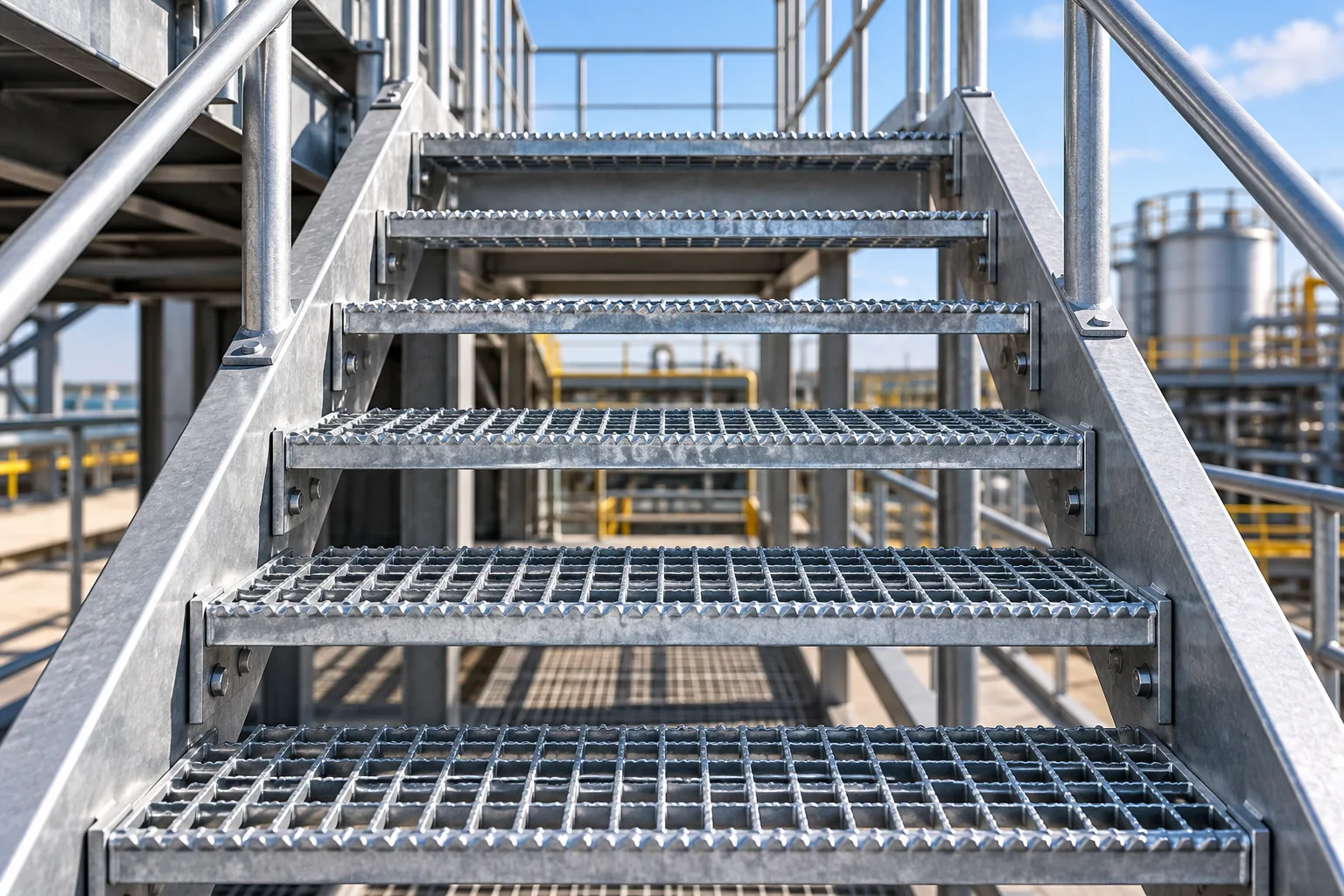
Grating for staircase applications is an open metal or composite stair tread designed to provide a strong walking surface while allowing water, dirt and debris to pass through. The right type depends on the staircase environment, expected load, required traction and material requirements.
AMMS Global offers stair tread solutions including serrated bar grating and Grip Strut safety grating for industrial stairs, platforms, walkways and access areas. Its product range also includes steel, aluminium, stainless steel and fiberglass grating options for different project conditions.
Before selecting a tread, it helps to understand how the main grating types differ and where each one works best.
Which Material Is Best for Stair Treads?
There is no single material that suits every staircase. Carbon steel can be appropriate for many general industrial applications while galvanized steel can provide additional corrosion protection. Aluminium and stainless steel become useful when weight or corrosion exposure is a major consideration.
Material | Suitable For | Key Advantage |
Carbon steel | General industrial stairs | Strength and structural performance |
Galvanized steel | Outdoor or moisture-exposed stairs | Additional corrosion protection |
Aluminium | Lightweight access structures | Lower weight and corrosion resistance |
Stainless steel | Corrosive or hygiene-sensitive environments | High corrosion resistance |
FRP | Chemical and highly corrosive environments | Corrosion and chemical resistance |
The final material should be selected according to the actual site conditions and structural requirements rather than material preference alone.
Steel Treads for Stairs
Steel treads for stairs are a common choice for industrial access because steel can provide a strong load-bearing structure. Serrated steel grating can also combine traction with the drainage benefits of an open tread.
Serrated safety stair treads use bearing bars with a serrated tooth profile and is available in standard and custom sizes with banded or bolted end connections.
Aluminum Treads for Stairs
Aluminum treads for stairs can be considered when reducing the weight of the stair structure is important. Aluminium also provides corrosion resistance which makes it relevant to certain outdoor and marine environments.
Aluminium bar grating is positioned for marine and coastal environments as well as applications where weight is a critical design factor.
Galvanised Staircase Applications
A galvanised staircase can be considered for outdoor or moisture-exposed environments where corrosion protection is required. Galvanizing protects the underlying steel surface and can extend the useful service life of the stair components when the finish is correctly specified for the environment.
Grating stairs made from serrated steel can be suitable for manufacturing plants, processing facilities, maintenance areas and other industrial locations where stairs may encounter moisture, oil or dirt.
What Makes Grip Strut Suitable for Staircases?
Grip Strut is a formed safety grating with raised edges around its openings which provide multiple points of contact for footwear. Its open construction also allows water and debris to pass through the tread.
Grip Strut stair tread is formed from a single steel sheet with a diamond pattern of pierced raised knuckles. The product page describes the surface as providing multidirectional slip resistance and notes that it is lighter than bar grating treads.
This makes Grip Strut worth considering for stairs, ramps, maintenance access and other locations where traction is a major design consideration.
When Should You Consider a Custom Metal Staircase?
A custom metal staircase may be appropriate when standard stair tread dimensions do not match the existing structure or project drawings. Customization can also be useful when the project requires specific tread lengths, widths, fixing arrangements or material specifications.
AMMS Global asks for dimensions, support arrangement, expected load, tread type, material, environment and fixing details when specifying stair treads. This information helps establish the appropriate product configuration.
For a replacement tread, measuring the existing tread can provide useful starting information. For a new staircase, project drawings can provide the necessary dimensions and support details.
How Do You Choose Grating for Staircase Applications?
Start with the operating conditions rather than choosing a tread based only on appearance. Consider the following factors:
Load requirements: Determine whether the staircase will carry normal pedestrian traffic or additional operational loads.
Surface traction: Serrated bar grating and Grip Strut provide different anti-slip profiles. The appropriate option depends on the level and type of traction required.
Environment: Outdoor stairs may require corrosion protection while chemical or marine environments can require a more resistant material.
Dimensions: Tread length, width, depth and support arrangement affect the final specification.
Fixing method: Treads can require different connection arrangements depending on the stair structure.
Maintenance requirements: Open treads can help prevent water and loose debris from remaining on the walking surface which can be useful in industrial environments.
Bar Grating or Grip Strut: Which Should You Choose?
Both options can provide an open anti-slip stair surface but their construction is different. Serrated bar grating uses load-bearing bars with serrated top edges while Grip Strut uses a formed sheet profile with raised edges around the openings.
Feature | Serrated Bar Grating | Grip Strut |
Construction | Open bar grating | Formed metal sheet |
Surface | Serrated bearing bars | Raised pierced profile |
Drainage | Open design | Open design |
Traction | Serrated surface | Multidirectional contact points |
Typical applications | Stairs, platforms, walkways | Stairs, ramps, maintenance access |
The selection should be based on the staircase design, loading, environment and required walking surface rather than assuming one type is suitable for every project.
AMM Solutions Stair Tread Options
AMMS Global provides stair tread solutions for industrial access applications including serrated bar grating and Grip Strut safety grating. Its Stair Treads range can be specified according to dimensions, material, loading and environmental conditions.
For broader flooring and access requirements, the Bar Grating range includes welded and other grating configurations. Also offers Welded Bar Grating, Aluminium Grating and Stainless Steel Grating.