Which Materials Are Used for Industrial Catwalk Grating in the US?
Explore the main catwalk grating materials used in the US, including steel, aluminum, expanded metal and FRP, and learn how each suits different industrial applications.
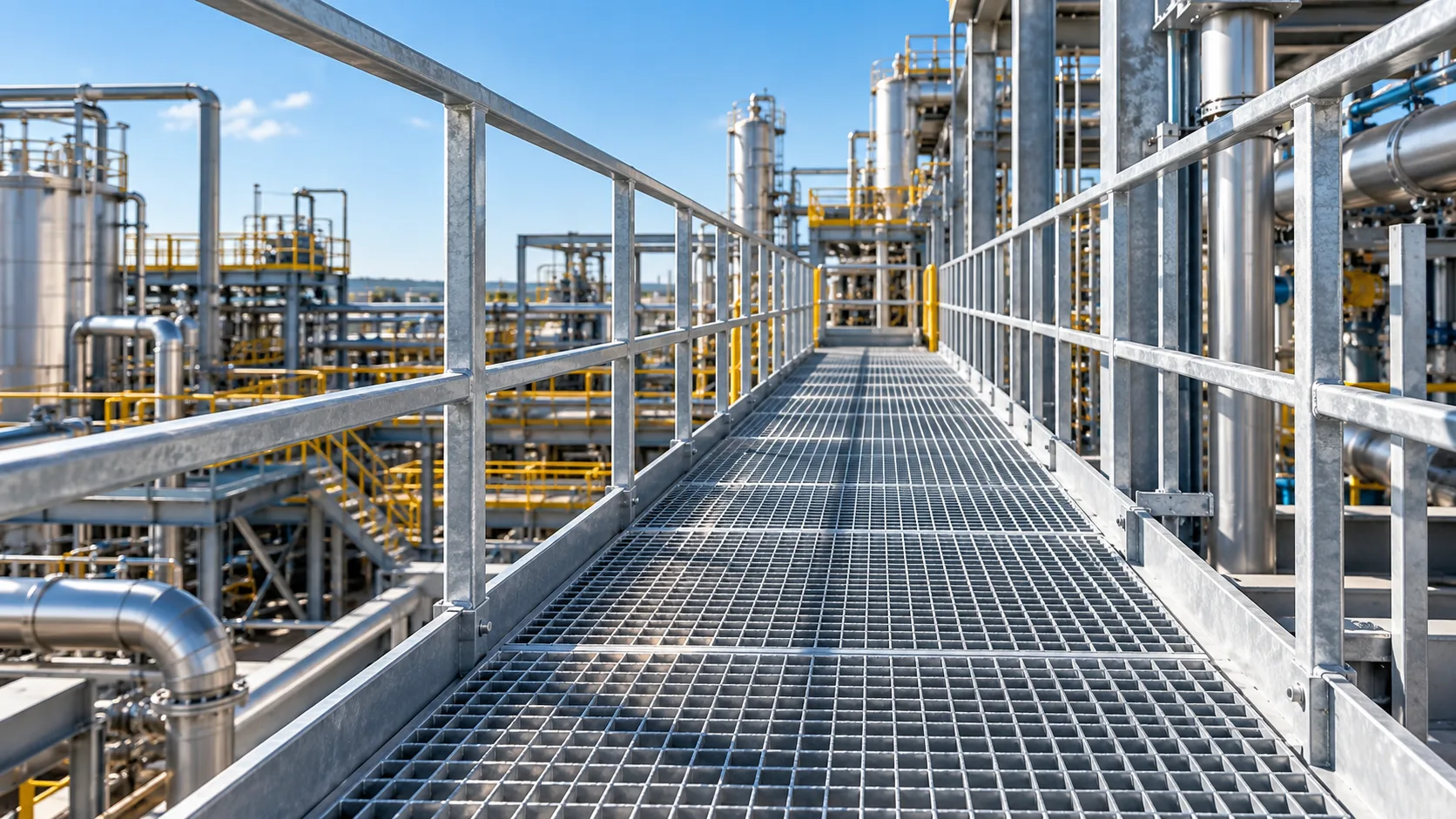
Catwalk grating is an open-metal or fiberglass walking surface built for elevated industrial walkways, mezzanines, crossover platforms, and rooftop access routes. AMM Solutions supplies industrial grating products suitable for catwalks and access areas with options designed for different load requirements, environments, and surface conditions. Catwalk grating provides slip resistance, load-bearing strength, and airflow in one panel while the material determines how it performs under load, moisture, chemicals, and foot traffic. In the US market, the main options include carbon steel, galvanized steel, stainless steel, aluminum, expanded metal, and fiberglass reinforced plastic (FRP).
Material Choices at the Decision Point
Material | Best For | Trade-offs |
Carbon steel bar grating | Heavy loads, indoor industrial | Needs paint or galvanizing outdoors |
Galvanized steel grating | Outdoor walkways, wet areas | Slightly higher initial cost than bare steel |
Stainless steel grating | Corrosive, washdown, food environments | Higher material cost, excellent lifespan |
Aluminum grating | Rooftop walkways, weight-sensitive structures | Lower stiffness than steel, higher cost than carbon steel |
Expanded metal catwalk grating | Short spans, lightweight platforms, billboard decks | Lower load capacity than bar grating |
FRP molded and pultruded grating | Chemical plants, water treatment, electrical safety | Higher upfront cost, lower stiffness, needs support spacing checks |
Carbon Steel and Galvanized Steel Catwalk Grating
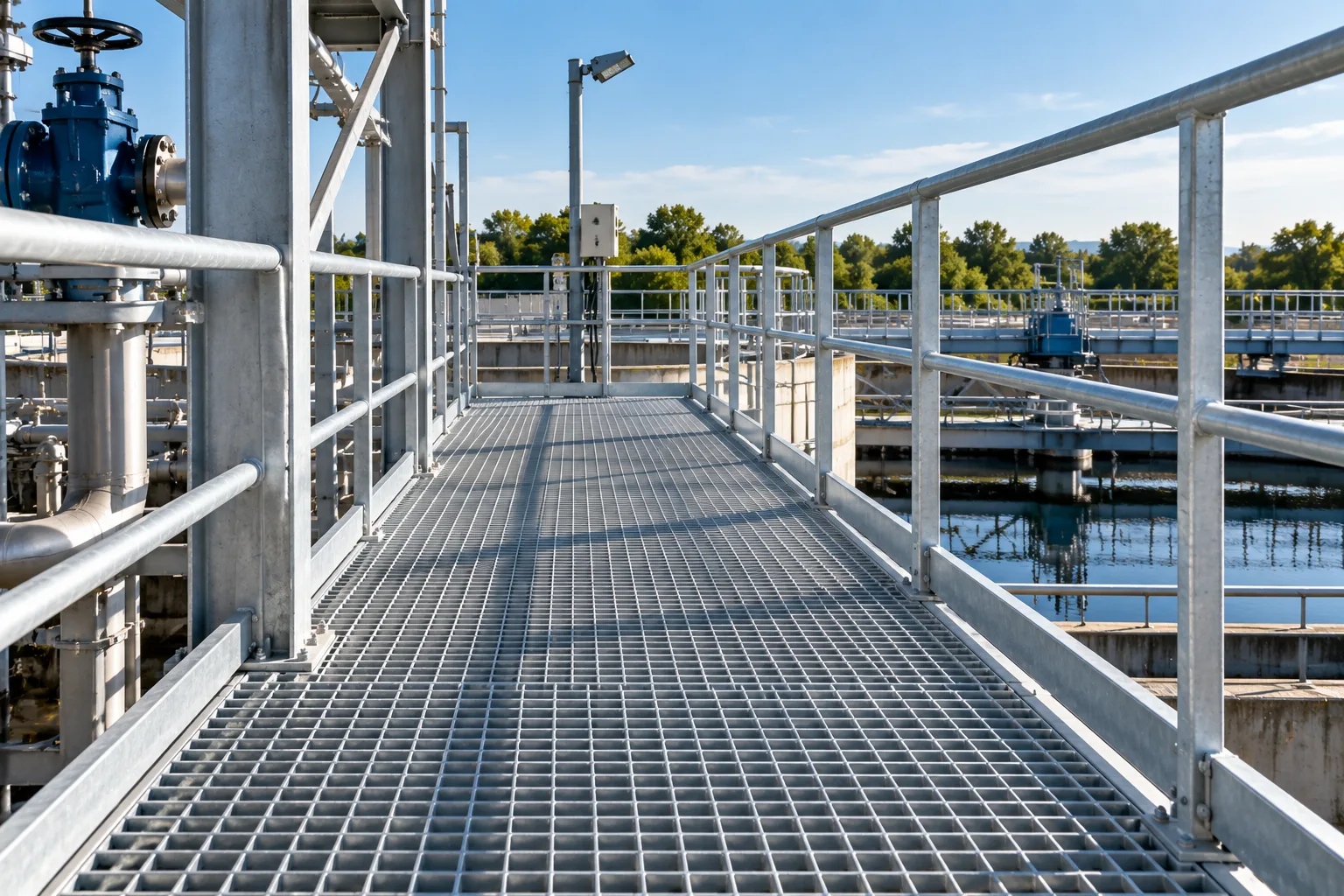
Carbon steel remains the standard industrial choice for steel catwalk grating in most plants and processing facilities. It is strong, readily available, and easy to fabricate into panels, stair treads, and custom shapes. The catch is corrosion: bare carbon steel rusts quickly outdoors or in humid environments, so most US projects specify hot-dip galvanizing. Galvanized catwalk grating adds a zinc coating that protects the steel for years in outdoor walkways, pipe bridges, and wastewater plants. Galvanised steel grating is widely used across industrial sites for exactly this reason, and it is often the default when engineers need a balance of strength, cost, and weather resistance.
Common bar grating patterns include welded bar grating, which joins bearing bars to crossbars by welding, and press-locked or riveted styles for smoother top surfaces. Welded Bar Grating is the workhorse for catwalks because it handles heavy loads and long spans without excessive deflection. Bar Grating in general offers the highest strength-to-weight ratio of the metal options, and it is available in aluminum and stainless steel as well as carbon steel.
Stainless Steel and Aluminum Options
Stainless Steel Grating earns its place in food processing, pharmaceutical, and marine environments where corrosion resistance and cleanability matter more than upfront cost. Type 304 handles most washdown and chemical exposure; Type 316 adds molybdenum for chloride-heavy settings. The material is dense, stiff, and long-lasting, but heavier and more expensive than carbon steel.
Aluminum catwalk grating solves a different problem: weight. Rooftop walkway systems, mezzanines over sensitive equipment, and access platforms on existing structures often cannot tolerate the dead load of steel. Aluminium Grating panels weigh roughly one-third as much as steel equivalents, and they never rust. The trade-off is stiffness. Aluminum deflects more under the same load, so spans may need closer support spacing. It also costs more than carbon steel, though less than stainless.
Expanded Metal Catwalk Grating
Expanded Metal is made by slitting and stretching sheet metal into diamond-shaped openings, creating a one-piece panel with no welds or joints. Standard Expanded Metal keeps the raised, slightly textured surface from the forming process. Flattened Expanded Metal is run through a roller to produce a smooth, level surface that is easier to walk on and less likely to catch debris.
Expanded metal catwalk grating is lighter and more economical than bar grating for short spans, and it is common on billboard platforms, machine guards, and light-duty access walkways. The diamond pattern runs with a long way of design (LWD) and a short way of design (SWD). For catwalk use, the long way typically runs across the shorter span so the panel carries heavier loads in its applied state. The main limitation is load capacity: expanded metal cannot match bar grating on long spans or high-traffic industrial catwalks.
Fiberglass Grating for Corrosive and Electrical Environments
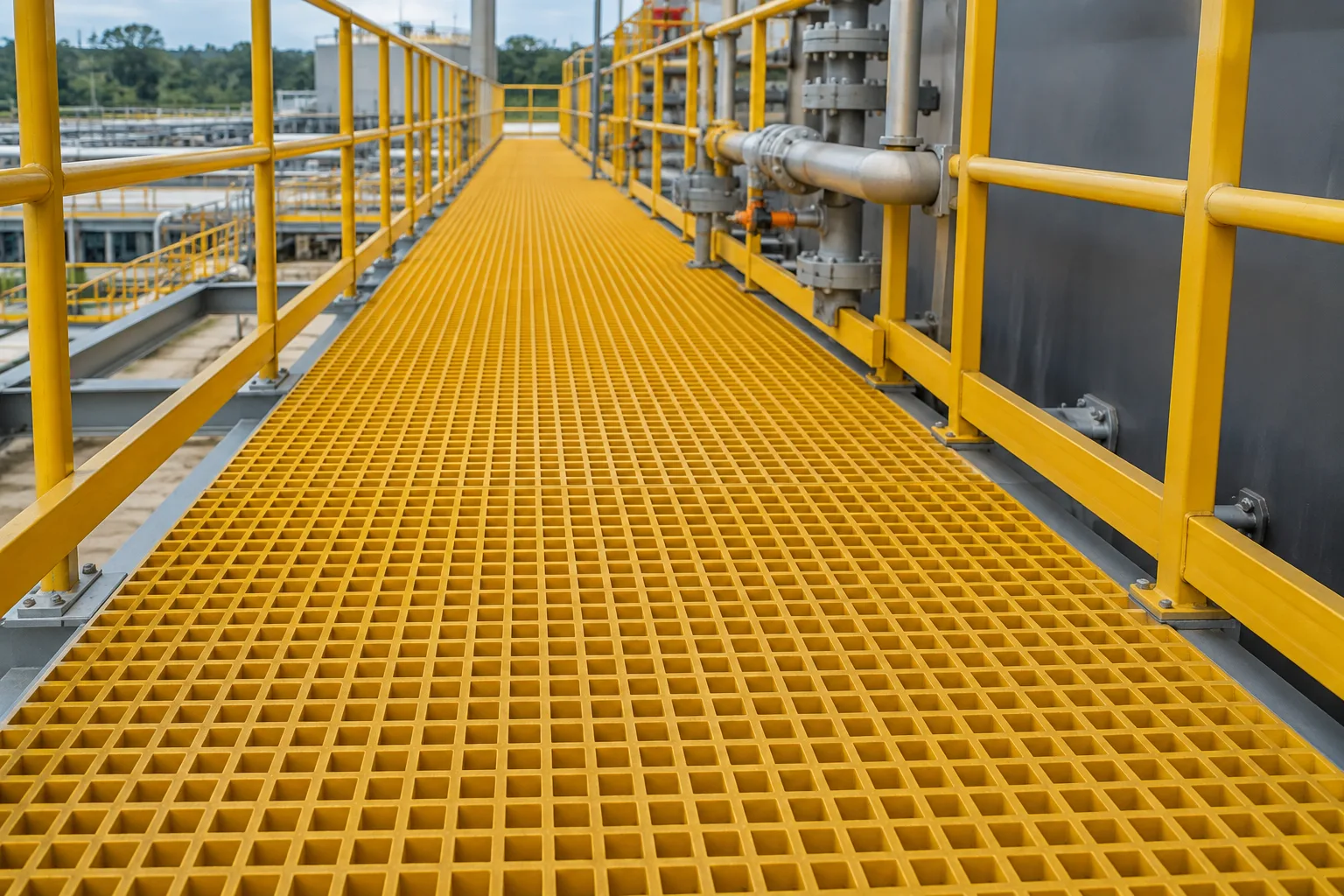
Fiberglass Grating, also called FRP grating, serves environments where metal fails. Chemical plants, water treatment facilities, offshore platforms, and electrical substations use FRP because it resists corrosion, does not conduct electricity, and weighs far less than steel. Two manufacturing methods dominate the US market.
FRP Molded Grating is formed in a mold with continuous fiberglass strands and resin, producing a one-piece panel with a grit-top walking surface. It handles multidirectional loads well and is available in standard panel sizes with square or rectangular mesh openings. FRP Pultruded Grating is built from pultruded bearing bars and cross-rods joined with resin, giving it higher stiffness in one direction and making it suitable for longer spans. Both types require careful support spacing because FRP is more flexible than steel, and both cost more upfront than carbon steel. The long-term savings come from eliminating repainting, rust repair, and replacement in aggressive environments.
What Experienced Buyers Check Before Ordering
Panel size and span direction matter as much as material. Catwalk grating panels commonly come in widths like 24, 36, and 48 inches, with lengths up to 120 inches, but custom fabrication is standard for mezzanines and crossover platforms. Always confirm the span direction with the supplier, especially for expanded metal and pultruded FRP, because load capacity changes dramatically when the panel is turned.
Surface finish affects both safety and longevity. Serrated bar grating adds slip resistance in oily or wet areas, while grit-top FRP provides traction in chemical environments. Plain smooth bar grating is easier to clean but slicker when wet. Specify the walking surface based on the actual conditions, not just the load table.
Fastening is another common oversight. Catwalk grating clips, saddle clips, and hold-down fasteners keep panels from shifting under traffic or vibration. Loose panels are a safety hazard and a source of noise. For galvanized panels, use galvanized or stainless fasteners to avoid premature corrosion at the connection points.
Fabrication details matter too. Cutouts for pipes, toe plates, stair tread nosings, and radius corners are easier to specify before the grating is galvanized or molded. Retrofit cutting in the field often damages coatings and voids warranties.